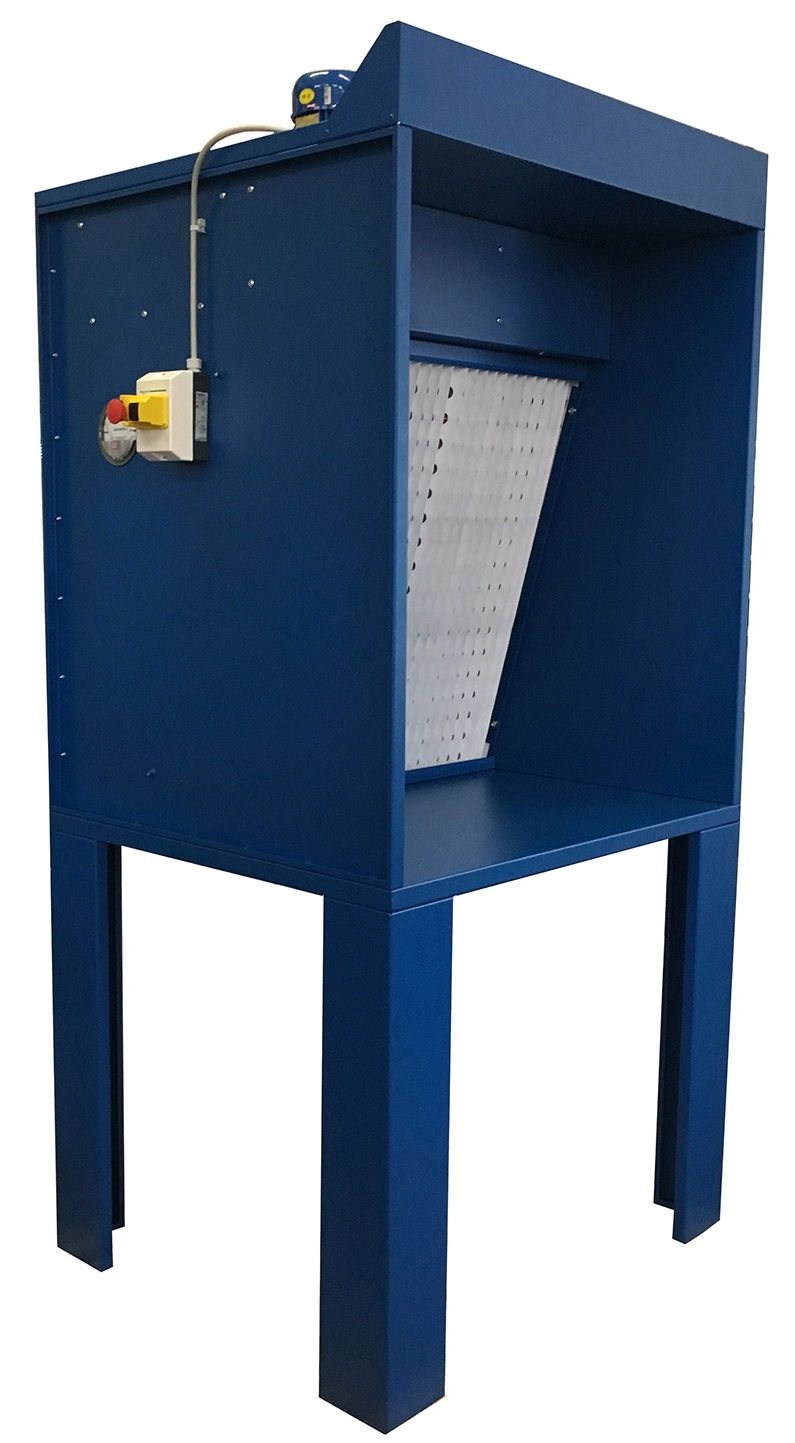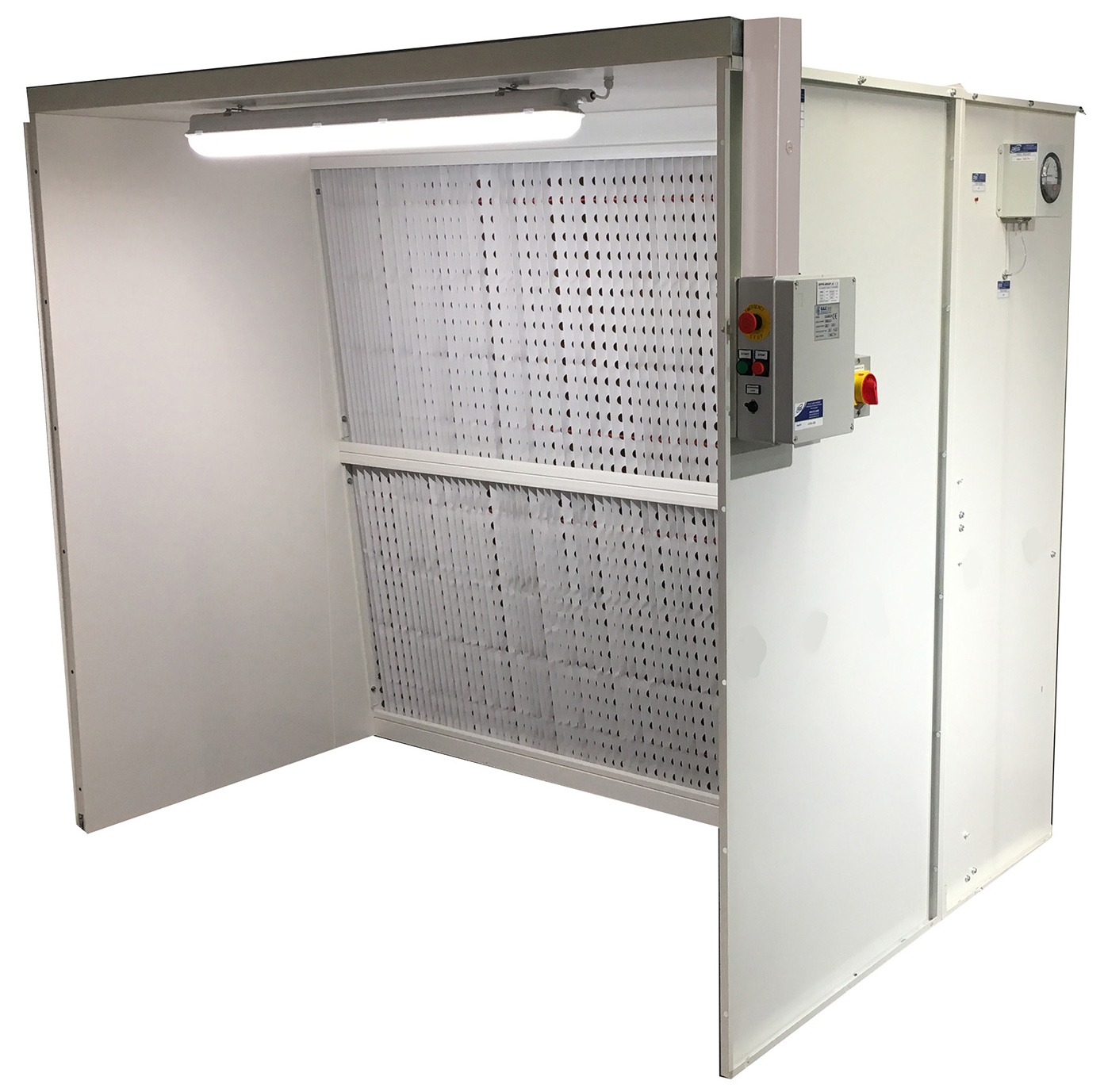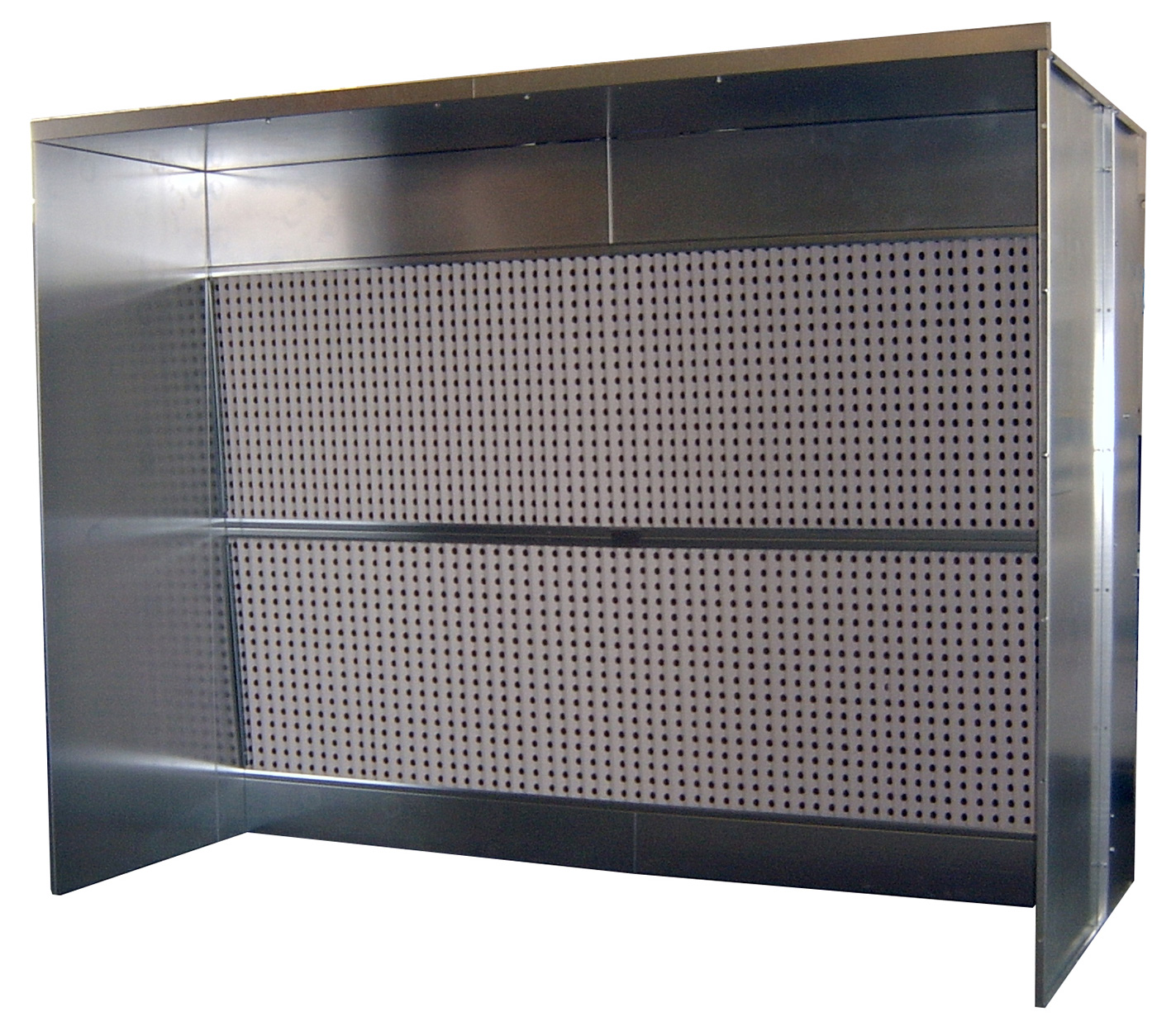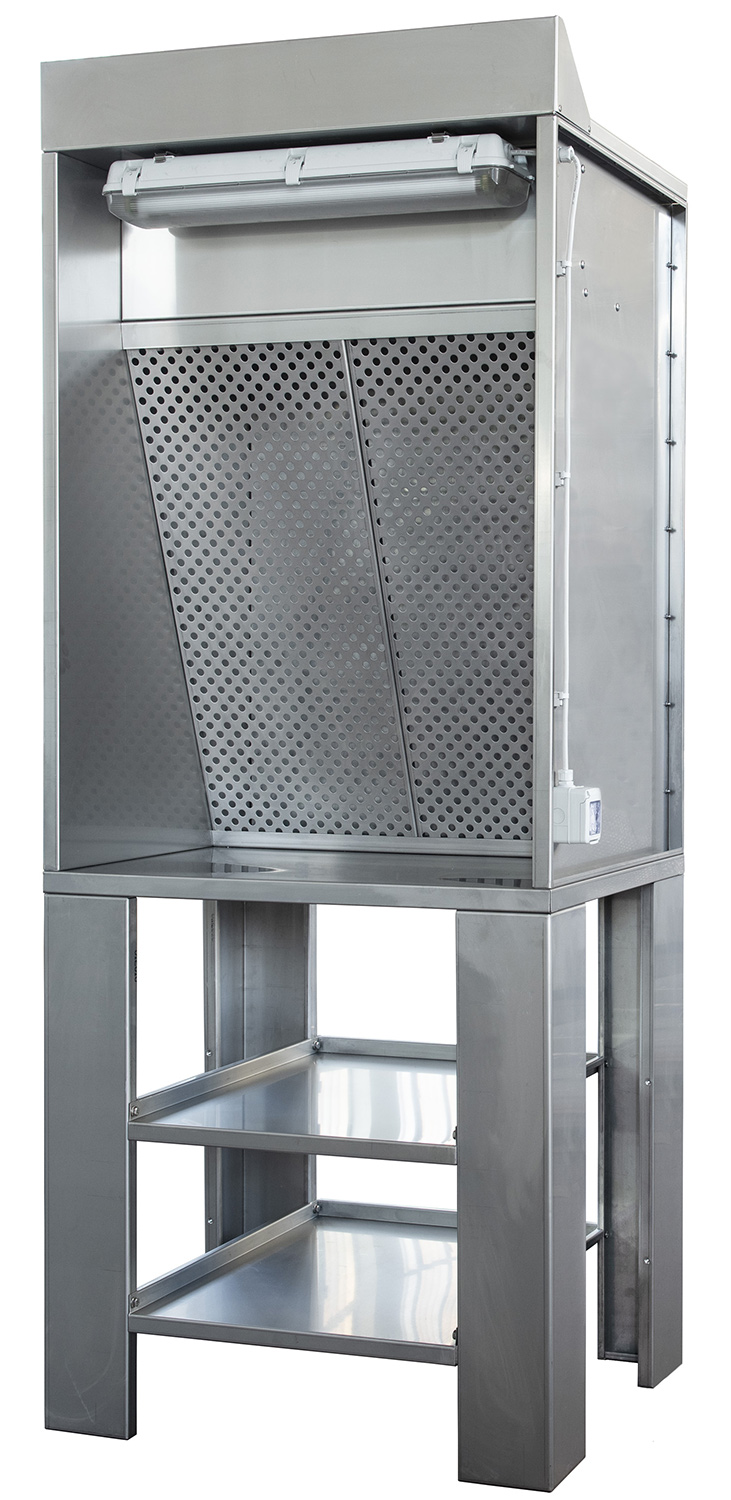


A filtration system combined with a spray booth is essential to ensure efficiency, safety, and compliance with environmental regulations.
Dry spray booths are structures designed to capture overspray (paint not adhered to the workpiece) without using water, but through mechanical filters.
The operator or robot applies the paint (by spray, airless, HVLP, etc.) to the workpiece inside the booth. A portion of the paint does not settle on the piece and remains suspended in the air (overspray).
The air containing the atomized paint is drawn toward the back or base of the booth by a fan, which may be integrated into the structure or installed separately.
The air then passes through two filtration stages:
At the end of the process, the filtered air can:
Our CS dry booths are ideal for those looking for a simpler, more economical, and cleaner solution, especially for non-continuous or small-to-medium scale production cycles.
The choice of type and number of filters is essential to ensure safety, quality, and compliance with regulations.